Showing posts with label chickens. Show all posts

Wednesday, May 2, 2012

farm update - chicken sperm and goat teats

It's been very busy around here. I'm working on two sculptures that I hope to have finished in time to present to the curator of my upcoming show. We also added three pregnant goats to our herd in steps toward getting our creamery up and going. I'm still making cheese with purchased milk, but soon we should have plenty of our own. The local extension office has been helpful with legal information and in my free less busy moments (while filling a trough, or taking a pee) I'm reading in preparation for being a goat midwife next month. To catch you up on what's happening on the farm I took some pictures this evening...


The new girls are Saanens. Saanens are known for their large size, vitality, herd compatibility and their “eager to please” temperament, but the largest part of their popularity is their milking ability. They are known as the Queens of the Dairy Goats.


These girls are all pregnant and their udders are starting to grow


We are teaching the herd to goat pack. Evening walks are good training


leaks


lettuce


baby apples


figs


plenty of eggs


new additions to the egg laying team


a Show Girl for the fun of it


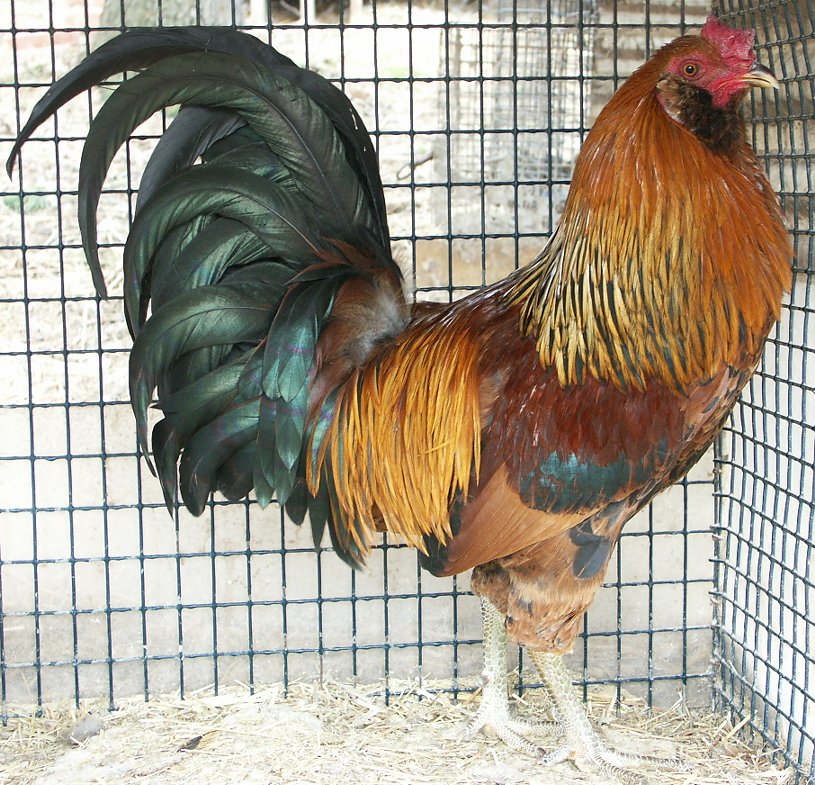
a beautiful new Cochin rooster for breeding. They have so many feathers that they can't breed naturally. The kids and I learned how to artificially inseminate on a 4-H field trip


My two older ones recently competed in the Virgina Poultry Federation's Poultry Judging Contest. Their teams did well in the state wide competition.

Hopefully my next post will include the finished sculptures!


Friday, March 9, 2012

The Painter Who Loved Chickens - a Book Suggestion

We just checked out a lovely children's book from our local library, one that earns a spot on my gift book list.


The Painter Who Loves Chickens, by Olivier Dunrea is the story of a painter who lives in the city yet dreams of living on a farm with the animals he loves. The illustrations are bright, colorful, and full of fun details. As a 4-H poultry club Mom, I appreciate the accurate breed paintings opposite each full page illustration.


There once lived a man who loved chickens - very much. He made his home in the city, but he dreams of living on a farm. And on his farm he would have chickens, lots of chickens....


Sure, I'm a painter who loves chickens, but I promise you don't have to be to fall in love with this book.

Thursday, November 17, 2011

jack-o'-lantern for dinner


The no waste Mamas

Having to take your own trash to the dump puts you in touch with your waste very quickly. I'm happy to say our schedule has changed over the past year; there's very little that is not composted, fed to chickens, or recycled. I'd like to say it's our drive to be green, but I know big A and I are happy to avoid a smelly trash haul whenever we can!


Sunday, July 3, 2011

the verdict is in

For those of you who weighed in on the rooster post I'm back with the verdict - it looks like #3 is a rooster. For a while I was convinced #2 was a rooster too, but those with more experience say no.

Now to break the tie I'll have a chicken draw the name. Penny, the hen in charge, will draw a piece of monogrammed kale...


That's a K for Karen! Please send me your address and expect a Papier-mâché hen in about 2 weeks.


In other news, baby praying mantises have invaded


We're happy to escort them to the garden.


Wednesday, June 15, 2011

my weeding partners (pastured chickens)

The chicks are almost to the age where they can be let out on pasture with the big guys, but not quite. We had a trial run for about 40 minutes and one of the barred rocks was carried off by a hawk. Until we are able to buy a rolling hen-house for trips to the back field, I've devised a contraption to let the chicks graze with me while I'm in the garden. It's a dog crate with the pan at the bottom removed. The weave of the wire is very open and allows grass, weeds, and bugs to come through. As I move through the garden, I move them down the rows with me. The little guys love it! When I'm in the run I set down the crate, open the door and yell, "geeeeet in the craaaate" like a hog caller (it's very funny to hear our youngest try this)they all run in ready to be carried off to the field.


This is our baby turkey; he stays close to my ankles so he's allowed to leave the cage.

Why go through all the trouble? Because we want to get these birds on pasture as soon as possible.

Pastured eggs have • 1⁄3 less cholesterol• 1⁄4 less saturated fat• 2⁄3 more vitamin A• 2 times more omega-3 fatty acids• 3 times more vitamin E• 7 times more beta carotene You can read more here


If you're eating eggs that were produced in a factory farm, not only are you supporting tortuous conditions for the hens, but you're not providing yourself, or your family, with the wealth of nutrients nature intended.

Depending on where you live it might take a little time to research who is providing pastured eggs in your area, but it's worth it. Maybe you can care for your own hens? Let your search for good food weave its way into your life. I can't think of many things more important than being an active participant in procuring your own food.

I like the way Farm Forward puts it, "...each one of us is a farmer 'by proxy'* helping to shape the world we live in through the food choices we make." The extra time and money involved in finding foods that reduce animal suffering, decreases the negative effects of farming on the environment, and increase our personal health is actually a good barometer for how much of these animal products we should be eating. There's no doubt the amount needs to be decreased. I like to think of the fair exchange of money between myself and the farmer, or my sweat caring for the animals, as a reminder that these are precious foods. Government subsidies have warped our perception of what should be on a plate every night and what it should cost to get it there. Maybe it's going to be a little less animal product, but you're going to feel good about what's there.

So yes, at first carting juvenile birds around to graze in the sunshine may sound silly, but then you start thinking about it...


*"The idea of “farming by proxy” comes from writer and farmer Wendell Berry, who uses it throughout his writings on rural life, agriculture, and conservation".

Monday, June 6, 2011

rooster?

The first time we brought home chicks we all hoped they wouldn't turn out to be roosters. Our little urban set-up couldn't hide the inevitable crowing, so any chicks that looked like they were male had to return to the farm. One little guy remained ambiguous for a few months until one September morning when we (and our neighbors) awoke to quite a few loud cock-a-doodle-doos. I quickly brought him inside, but he would not stop. He was determined to show off his new talent and I was determined not to have a visit from animal control. He stayed in the closet until he joined a large flock later that evening.

Now we are lucky enough to have plenty of space for our barnyard explorations and think it would be rather nice to have a rooster to protect the ladies while they're foraging around the property. 

We have three Ameraucana chicks that are close to being sexed. The Ameraucana roosters are beautiful, so we're hoping one of these might be a male.

picture courtesy of Hidden Falls Farm

The kids have been guessing, I have a pick, how about you? Which of these chicks will be a rooster?


Leave a comment stating which chick you think is most likely to be a rooster:

chick #1
chick #2
chick #3
none of the above

The people who pick correctly will be entered in a drawing for a Tangelo Studio, Papier-mâché Hen. The chickens have an inspection coming up, so I'll post the results on July first.


Tuesday, May 10, 2011

hen house visit

The Ameraucana is still a favorite around here, but we've added a few new breeds that we're quickly falling in love with.  


 This is our adolescent, Cleo.
 
Here she is with her two best friends, Lily and Licorice, the Australorps. These three are inseparable; they share knowledge about food and never compete. At night they roost together.


Extremely bossy for a little guy - we're still getting to know her. Notice the carriage of the tail and the wings pointed down.


She is an extremely gentle bird who loves to come up and visit while we're tending the hen house.

 
  Peep show

 
Ameraucana chicks and one little Japanese bantam


Barred rock chick


The barred rock is a hardy chicken and prolific layer of brown eggs - I'm happy to add some to the flock.

 
All in all the new birds are getting along well and enjoying plenty of conversation around the water cooler.


Friday, April 29, 2011

the difficult days

As I write this I hear the red hen, Penny, calling again and again to the flock that will not answer. I've been up since 3:30 this morning when I heard bird cries through the window. I grabbed a dim flashlight and ran to the hen house in boots and pajamas. I didn't want to look. I didn't want to scream if I saw it - the creature who had torn these bodies and lay them out in the pen yard. Some bodies were missing, some looked as if they were killed for sport, their beautiful feathers plucked and left in the mud.

Two birds looked dead at first, but upon further inspection I could see they were breathing. They are inside and I'm hoping for the best. Two chicks found a crack in the wall to hide in. Their bodies were so stiff with fear I thought them dead at first. I put them in my shirt while I searched for survivors. Three adults looked at me from high in their perch.

As the sun came up the morning birds threw their songs back and forth in the trees above. My path back to the hen house was paved with dandelions; some of them rose and flew away - goldfinches - I wasn't paying attention. I was thinking about telling the kids. I hurried them out the front door to the bus this morning. I wasn't ready for the tears. The birds we have had for close to three years are gone. All but two of the teenagers are gone. Belly feathers fell from the sky - sparrows were collecting them for nests. The survivors got a drink of water. I grabbed the rake and started to cleaning.

This week the southeastern storms washed away many of my seedlings setting back the garden by weeks. My hen house, inside a fence within a larger fence was ravaged. Around town I've listened to the stories of lambs being dragged off, wild dogs killing kid goats, and hen house slaughters. I wondered if I could escape the experience - it seemed everyone with livestock had their story. How can you ask to be this close to life and only accept one side of the coin? This is the baptism -this is the "jump-in".

I've posted my childhood prayer for animals before. We'll say it at their grave today:

Dear mother
hear and bless
thy beasts and singing birds
and guard with tenderness
small things that have no words.


Rest in peace,
Falcon & Friends

Tuesday, April 12, 2011

meet Vicky & the new peeps

The new chicks came in two groups. The first ones are getting their adult feathers and have just gone out to the coop; the younger ones are still in the house under the brooder light. My daughter's new speckled Sussex, Vicky came back inside last night during the storm because she is still quite downy and would enjoy being under the light on a blustery night. I was worried she might bully the little guys, but we were surprised to see maternal instincts kindled by the little peeps already. She raises her wings for the little ones to cuddle under and gently preens them. She is an excellent adoptive/teen mama and an all-around beautiful little hen.


Here are a couple of the little ones. They are both the same age; one is a standard chick and one is a bantam.


And because it's National Poetry month I'll celebrate the arrival of our new friends with a poem:

Chicks By Carl Sandburg

The chick in the egg picks at the shell, cracks open one
oval world, and enters another oval world.


“Cheep… cheep… cheep” is the salutation of
the newcomer, the emigrant, the casual at the gates
of the new world.


“Cheep… cheep” … from oval to oval, sunset
to sunset, star to star.


It is at the door of this house, this teeny weeny egg-
shell exit, it is here men say a riddle and jeer each
other: who are you ? where do you go from here?


(In the academies many books, at the circus many sacks
of peanuts, at the club rooms many cigar butts.)


“Cheep… cheep” … from oval to oval, sunset
to sunset, star to star.


Friday, February 18, 2011

sunshine and easter eggs

Today the weather was in the high 60's again - what a treat for February! I did my best to split my studio time with farm work, but it was so hard to stay indoors and too windy to move the supplies outside. The sunny afternoon gave me the perfect opportunity to get around to a few chores that have been waiting, like hauling chicken poop to compost. While I was in the hen house I was surprised with the first Ameraucana egg. The  Ameraucana chickens have to be one of my favorites; they have feather ear tufts and lay light blue eggs. The breed is grouped together with what are called "Easter Eggers". They have a bird of prey look to them and I can imagine them strutting around in the wild unlike some of the other hens who's softer domesticated brand of beauty has them looking at home in their nesting box.  

image courtesy of eFowl.com


The longer days have a few of the girls laying regularly already. 


We have quite a variety of eggs and they're piling up. Today I had kale and a poached egg for lunch. This weekend I'll try some more egg recipes from a book I checked out at the library called, The Good Egg - the Poached Eggs on Creamy Curried Lentils are calling to me.

Sunday, August 29, 2010

I Grew This - I Ate It Too! Philadelphia Vegetable Gardens

The idea of growing some of what you eat is gaining mainstream momentum. It's no longer confined to the rugged homesteader or the country farmer. Over the past few years we've started to see more community gardens and many new and exciting ways to use urban spaces for growing food. The trend toward having a connection to the food you eat is being integrated beautifully into yards everywhere.


Planting and tending to your own vegetable garden, or keeping a few backyard chickens does more than supply food, it offers an opportunity to understand what it takes to get food to your plate. Not only will you supply yourself with fresh organic vegetables, you will be more likely to value food produced in an environmentally friendly, humane way and support farmers who do the same. There's no way around it - once you experience being part of the cycle of sowing, tending and harvesting you will honor the process. Knowing where our food comes from is the key to our health and the health of the planet. If you haven't already, I suggest reading one of Michael Pollan's books on the subject. There's now a young reader's version of The Omnivore's Dilemma that I'm looking forward to giving my son. The truth about food is hard to swallow, but once it's digested you can't help but see those vegetables in the yard as beautiful.


As the interest in urban farming began to spread the first gardens to pop-up were generally backyard spaces tucked away so that you couldn't see them unless you knew they were there. In some neighborhoods there's a stigma attached to growing your own food that is just now beginning to dissipate. I believe it's two fold. First of all most people are just used to a certain type of landscaping; we know that a tidy lawn, mums, pansies, shrubberies and some mulch will keep you looking like a good home keeper. Nobody wants to stick out like a sore thumb. Unless you live in a progressive neighborhood, taking the leap is pretty daring. Secondly, the American dream includes rising in the class structure. What would it say if you had to grow your own food? For many years families who had to rely on their gardening skills longed for a day when they could escape being shackled to the necessity. Understandably, part of the joy is in having the choice.


Over the past five years I've watched my neighborhood change. Sure there were the hip crunchy folks with big back yards that have been letting the squash and tomatoes run wild for years, but just this summer I've begun to see some pleasant surprises. Collards, broccoli and chard have been spotted in a landscape unchanged since the 1950's - worked in like an ornamental as if it had always been there. And one of the biggest surprises was the fact that my chickens have been welcomed. We have some regulars who come by to visit on evening walks and the other day I saw a line of summer camp kids being led through the ally to take a look!


Here's what's going on around the neighborhood - people finding joy in getting to know their food.


A little bean field next to a perfectly manicured shrub!


Cucumbers planted at the top of a retaining wall in the back ally.


Claire McGuire recently bought a beautiful twin in the city of Philadelphia. Starting with only a lawn, she and our neighbor Kevin designed a beautiful flowing vegetable garden that integrates flowers with the following vegetables and fruits:


heirloom tomatoes

chard

spinach

summer squash

zucchini

beans

peas

blueberries

strawberries

apples (which will be espaliered against the fence)


Claire was kind enough to let me photograph this beautiful garden in the month of August - thank you Claire! All of us gardeners are self conscious about the toll the August heat takes on the plants.


If you're in the area let me know what you're planting around town. I'm especially interested in getting some more images of local city chickens.


Enjoy...and keep growing!

linkwithin

Related Posts with Thumbnails